🎁 Black Friday Gifts – 8% OFF Code: BF8 | Free Shipping



How to Read the Build of a Cloth Body Reborn Doll

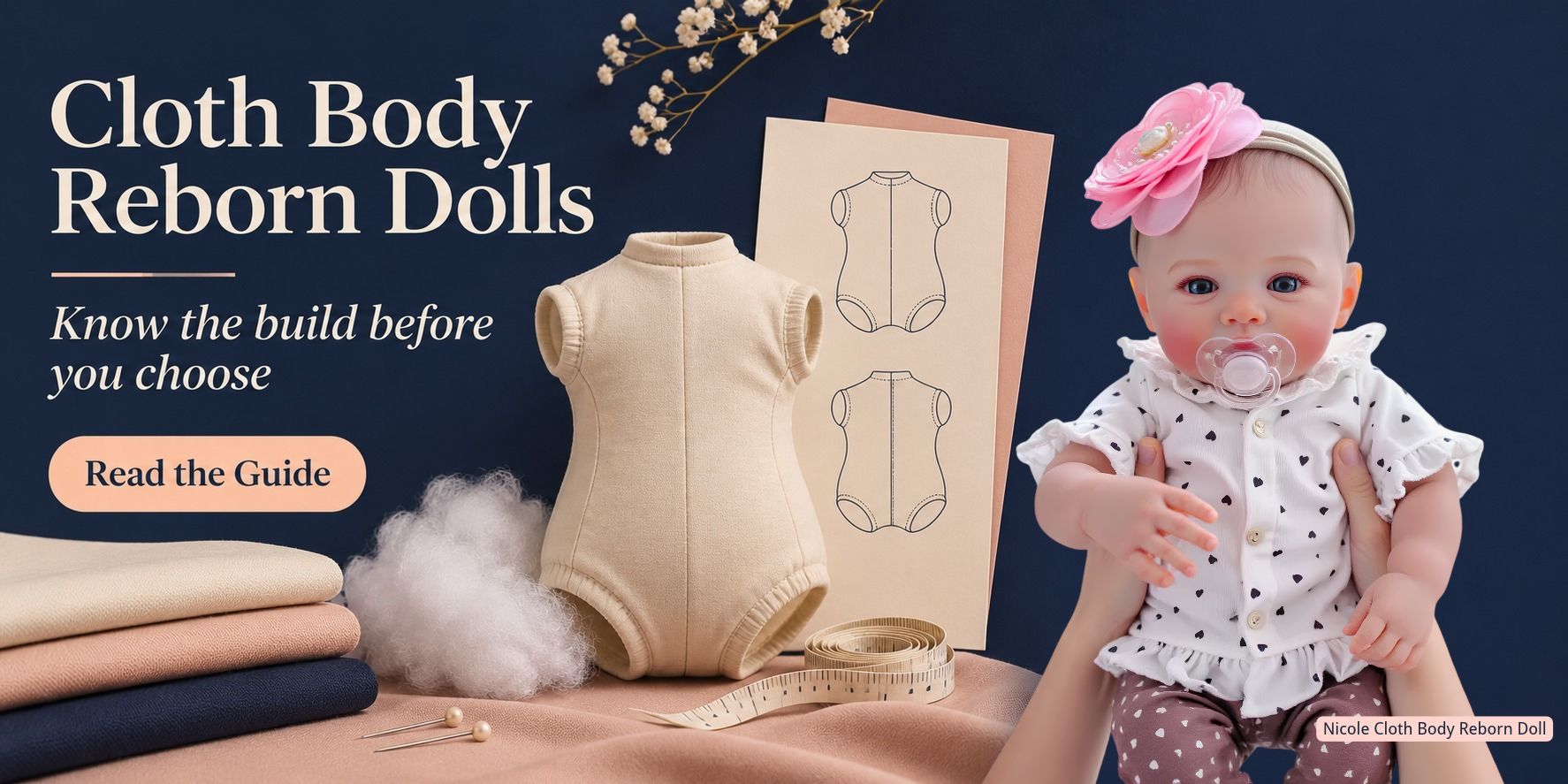
The most useful picture of a cloth body reborn doll might be the one that shows the edge of a sleeve. A portrait tells you whether you like the face. An unobstructed view of the shoulder and leg openings tells you how much of the body is fabric, how the outfit sits, and what you can reasonably expect from the doll when you change its clothes. Those are separate decisions. A listing can give you a clear answer to one and very little information about the other.
A cloth body reborn doll has a fabric torso. Some designs pair that torso with vinyl parts. The words full limbs can describe the extent of those parts without saying that the torso is vinyl. If your choice depends on where fabric ends, ask for a view of the actual build. A face photograph, a length in inches, and an attractive outfit are not enough to establish that boundary.
Start with three questions
What is the torso made from? Where do the sculpted arms and legs meet the fabric? Which position does the seller recommend for handling or display? Those questions give you a useful reading order. They also help you separate a real product detail from a term that may be used loosely across listings. If the answer to any one is missing, leave it open rather than filling the gap with a detail from a similar-looking doll.
For a broader material comparison, see the vinyl and silicone guide. Use this page for the narrower problem of reading cloth-body construction from product photographs and descriptions. You can browse cloth body reborn dolls while keeping a note of the exact product or variation you are considering.
Make a simple map of the doll
Sketch a head, torso, two arms and two legs on paper. Write the material beside each area only when the product information confirms it. This is not a drawing exercise; it is a way of catching an incomplete description. If you can write vinyl beside the head and hands but have nothing to put beside the chest, you know what you still need to ask.
Then draw the line where each arm or leg meets the fabric. If the location is unclear, write unknown. Two dolls described as cloth body can have different coverage and different ways of moving. A diagram of one should not be used as a specification for another. Ask the seller to identify the boundary on a current picture of the version you want.
Read full limbs and full body separately
Full limbs and full body answer different questions. The first concerns how much of an arm or leg is sculpted. The second, when used precisely in a material description, concerns the construction of the body as a whole. Full vinyl limbs do not establish a full vinyl torso. If a listing uses both expressions, ask for a plain description of the torso, arms and legs individually.
Some collectors use short labels for different limb lengths. Those labels can be useful between people discussing the same kit, but they are easy to misread when you are looking at an unfamiliar finished doll. Prefer a photograph or a clear verbal description over guessing what a fraction means on that particular page. It is reasonable to ask whether you would see fabric above the elbow, near the shoulder, or above the knee with an intended outfit.
Look for the photographs that resolve uncertainty
A front view in the supplied outfit is a good starting point. Add one side view and, when the seller can provide it, a detail of the relevant join. You do not need an undressed photograph if a closely framed detail answers your question. A detail can show whether a garment opening stops before the seam and whether the fabric you see belongs to the doll or its clothing.
Ask whether the photographs show the exact item, a sample, or a different option. A useful photo request specifies what you cannot see: the edge of the torso at the sleeve, the leg opening when supported, or the shape of the chest under the included garment. That is easier for a seller to answer than a request for more photos with no explanation. Save the answer beside the product link so it does not get confused with a different candidate.
Consider the shoulder before choosing a sleeveless outfit
A sleeveless garment exposes more of the upper arm and shoulder than a long-sleeved garment. That can make the construction boundary more visible. If you enjoy a sleeveless look, look at the size and shape of the arm opening and the location of the fabric on the actual doll. Compare those two details before assuming that a sleeveless outfit in the same nominal size will work.
A visible seam is not automatically a defect. It may be an ordinary part of a particular build. The question is whether it suits your intended use. A collector who mostly displays a doll in a cardigan might be happy with a join that another collector would prefer to keep covered in summer portraits. Either preference is reasonable. You can choose a garment that works with the doll rather than trying to alter the construction to suit a garment.
Check the leg openings in the pose you want
A romper can look quite different in a photograph of a doll lying flat and a photograph of the same doll in a supported seated pose. Fabric can gather or pull as the legs rest at a different angle. If you are buying a short outfit for a specific scene, request a supported view close to that position. A photo made for a listing is not proof that a doll can sit by itself.
Measure the garment opening and ask how the seller measured the doll. Length alone cannot tell you the circumference of the upper leg or the cut of an outfit. A comfortable fit is a practical goal: the opening should not need to be forced around a join and the clothing should not put tension on an attachment. If you cannot confirm a fit, wait until you can measure the doll or start with the outfit supplied.
Notice how a collar changes what you see
A high collar can cover part of the upper torso that a wide neckline exposes. A collar that looks tidy on a hanger may sit differently when the head is supported at the angle you prefer. If the neckline matters for a portrait, compare the front and side views. Pay attention to whether the fabric body or a fastening would be visible when the doll is supported appropriately.
Do not use a tight collar to hide a join. Choose a garment that fits comfortably instead. A plain layer underneath may help create the look you want if it is appropriate for the doll and does not strain seams. A seller who knows the construction can help you distinguish a change of styling from a handling issue that would require different care.
Confirm whether the torso is actually weighted
The expression weighted can be meaningful, but it does not tell you how much the doll weighs, where that weight sits, or whether two versions feel similar to hold. Request an actual item weight and ask whether it includes clothing or accessories. If the weight affects your display support or your own comfort, ask about where it is distributed as well.
A softer torso and a heavier torso are not the same thing. Fabric describes the outer construction; the internal feel depends on how a doll is assembled. Do not infer stuffing, weighting material, or an internal mechanism from the name of a product. Avoid opening a finished doll to settle the question. The seller or maker should explain what is appropriate for the specific build and whether a concern calls for professional help.
Choose for your own handling routine
Imagine the doll in a typical moment: supported on a display cushion, held while you are seated, or positioned briefly for a photograph. How much effort would that involve? The weight and the way it is distributed may matter more to you in that moment than the nominal doll length. Ask about support before selecting a pose or stand.
If frequent outfit changes are part of your hobby, ask which openings and closures are easiest for the construction. A buyer who wants a single display outfit can make a different decision. You do not have to choose a doll that does every job equally well. A focused choice is often easier to enjoy than a compromise based on a feature you rarely use.
Keep a fit note with each outfit
Once you have a doll, start a small note for clothes that fit comfortably. Record the particular garment, the neckline, sleeve length, closure and the type of pose in which you tried it. Include any areas that need extra room. This record is more useful than a list of nominal sizes because it describes how the real pieces work together.
If you shop again, compare a candidate garment with one you already know fits, using the same measurements on both. A product page can list length without giving the dimension you need. That does not make the outfit unsuitable, but it does make the decision incomplete. Ask about the missing measurement or choose a garment with clearer information. There is no need to build a large wardrobe before you know what works.
Plan for cleaning before you buy
A cloth torso should not be treated like a sealed washable surface. Ask for the individual care instructions, particularly if the doll has multiple materials, painted details or rooted hair. Do not assume that a damp cleaning method suitable for one part is appropriate for the whole construction. The linked silicone doll care guide covers silicone-specific handling. Do not apply its cleaning methods to a cloth torso; request the care instructions for your exact doll.
Clothes can also have their own care requirements. Remove them only as recommended, check the washing instructions for the garment, and confirm it is suitable for contact before using it again. When a listing does not describe the care routine, ask for that information before making the purchase. Avoid using an unverified cleaning product or attempting a repair based on a photograph.
Understand what a photograph cannot tell you
A clear photograph can show a seam, garment coverage, visible paintwork or how a doll looks in one supported arrangement. It cannot prove how the body feels in your hands. Soft lighting can also make a fabric transition less visible. A seller video may show movement better, but it still represents the conditions in which the seller filmed it. Look for the practical details that remain verifiable.
A useful listing pairs visuals with clear descriptions. If you are comparing two dolls, give each the same set of questions and put the answers next to each other. Do not give one a better construction score just because it has more photographs. A shorter listing with a direct answer about the torso can be more informative than a long listing with beautifully styled but similar images.
A worked example for a portrait outfit
Suppose you want a sleeveless dress for a supported portrait. Doll A has a lovely face but the listing gives only the overall length. Doll B has a different expression and a close-up that shows the shoulder join. The immediate choice is not between two faces. It is between a known shoulder boundary and an unknown one. Ask the seller of Doll A for a matching view before deciding how the dress would look.
Now suppose the answer shows that the seam would be visible with that dress. You can keep Doll A and choose a different garment, choose Doll B if the face also appeals to you, or postpone the purchase. None of those outcomes requires you to describe one construction as universally better. The question had a practical purpose, and the answer gives you a real decision.
A worked example for a gift
Imagine buying for someone who already owns several dolls. You know they like a quiet resting expression, but you do not know whether they prefer a particular torso. Ask whether they want the doll mainly for a shelf, photography or occasional holding. If they would rather choose the face themselves, share two clearly described options rather than guessing from a broad bestseller category.
If you want to add clothing, confirm the measurements and exactly what is supplied with the doll. A gift can feel personal without adding items that may not fit. A simple note explaining why you selected the expression can be more useful than a surprise outfit. Keep the care information with the gift, especially when the doll has fabric and painted surfaces with different needs.
Ask in one short message
A useful message might read: I am considering this particular version for a supported display and occasional outfit changes. Please confirm the torso material, where the sculpted arms and legs meet the fabric, and the doll weight without packaging. Could you show the shoulder or leg opening in the supplied outfit and tell me what care instructions come with it?
If you have a garment in mind, include the measurements that matter. Ask which dimension is most useful if you do not know how to compare it. Keep the seller’s answer as a record of what was confirmed, and make sure it describes the version you actually choose. Check the live listing again before ordering, because available variations and included pieces can change.
Make a comparison that you can finish
Use one row for each candidate and six fields: torso, shoulder join, leg join, actual weight, clothing fit and care guidance. Write confirmed, unknown or not applicable where appropriate. Keep your subjective impressions in a separate sentence. That distinction matters because a beautiful face is a real preference, but it cannot supply a missing measurement.
Do not turn the sheet into a contest to find the highest number of features. If you need a particular fit or support arrangement, one unanswered question may matter more than several extra accessories. Treat that question as a decision gate. When it is resolved, choose the face you enjoy. When it is not, keep looking or select the alternative that is better documented.
When a product description changes
A product page can change while you are deciding. A new photograph, updated options or a revised description may clarify the build or introduce a difference. Check that the product name and selected option in your notes match what you are ordering. If two parts of the same listing disagree, request clarification rather than trusting whichever detail seems more appealing.
Keep a short record of the included outfit and accessory choices. This helps you recognize what was expected when the item arrives. It also makes a follow-up with the seller easier if a detail differs. You do not need to collect every screenshot or share your order publicly. A few specific notes and the current listing address are enough for most comparisons.
Questions to ask before buying
Does full vinyl limbs mean the doll has no cloth?
No. A listing can describe full vinyl limbs and a cloth torso in the same product. Confirm the material of the torso separately. Ask where the arms and legs join the fabric if that affects clothes or photographs.
Will all clothes for the listed length fit?
No universal fit follows from doll length alone. Garment cut, torso shape, openings and seam locations matter. Compare the relevant measurements and ask which garments are known to fit the exact version. Use the supplied outfit as a reference if you already have the doll.
Can I tell the weight from a product image?
No. A photograph does not show how much a doll weighs or how the weight is distributed. Request the item weight, ask what it includes, and check the recommended support for your intended handling and display.
Is exposed fabric a quality problem?
Not by itself. The fabric may simply be visible because of the build and garment. Evaluate the condition of the actual joins separately from whether you prefer them covered. If something appears damaged, ask for clearer evidence and contact the seller before attempting any alteration.
What should I confirm at the end?
Confirm the actual variation, torso and limb materials, seam positions, dimensions, weight, supplied outfit and care guidance. Once those details match what you want, choose the expression and display style that feel right for your collection.
Decide which details belong in a listing and which belong in your notes
A good product listing can explain the build, the size and the supplied items, but it does not need to tell you how you ought to feel about a particular doll. When you find a description that feels persuasive, read it once for the impression and once for the actual evidence. Separate the photograph that draws you in from the sentence that confirms the torso material. Both have a place in the decision. Only one answers the construction question.
A buyer who likes the appearance of exposed sculpting might put shoulder visibility near the top of the comparison. Another buyer might prefer fabric under most outfits and ask first how to support the doll when holding it. Neither person has to defend a universal preference. It is useful to put the intended activity beside each requirement so that a missing answer does not appear more serious than it is. A measurement for a sleeveless garment may matter very little if you never plan to use one.
Be equally specific about what is included. A blanket that supports the doll in an image may be a studio prop. A garment shown in one photograph may differ from the selected option. If an accessory or an outfit is part of why you want the doll, ask for the actual included-items list. A visually appealing scene does not promise all the things used to make it.
Finally, think about what you will do when the doll arrives. Keep the supplied care instructions, take note of the exact variation, and let the doll rest in an appropriate supported position while you look through the information. Check the outfit and visible joins before trying a new garment. If something differs from a confirmed specification, document the difference and contact the seller. This routine keeps the purchase grounded in facts and leaves room to enjoy the very personal choice of a face and expression.
Choose your next step
If a fabric torso suits the way you want to enjoy your doll, explore the cloth body reborn doll collection. Use each product page to confirm the actual construction and included items. The category is a starting point for comparison; the exact product details should settle questions about dimensions, materials, clothing and care. If a detail matters to your choice and is missing, ask before ordering.