🍂 Fall Sale – 5% OFF Code: FALL5 | Free Shipping 🍁






















Reborn Toddler Dolls and Baby Dolls for Toddlers: Two Very Different Purchases

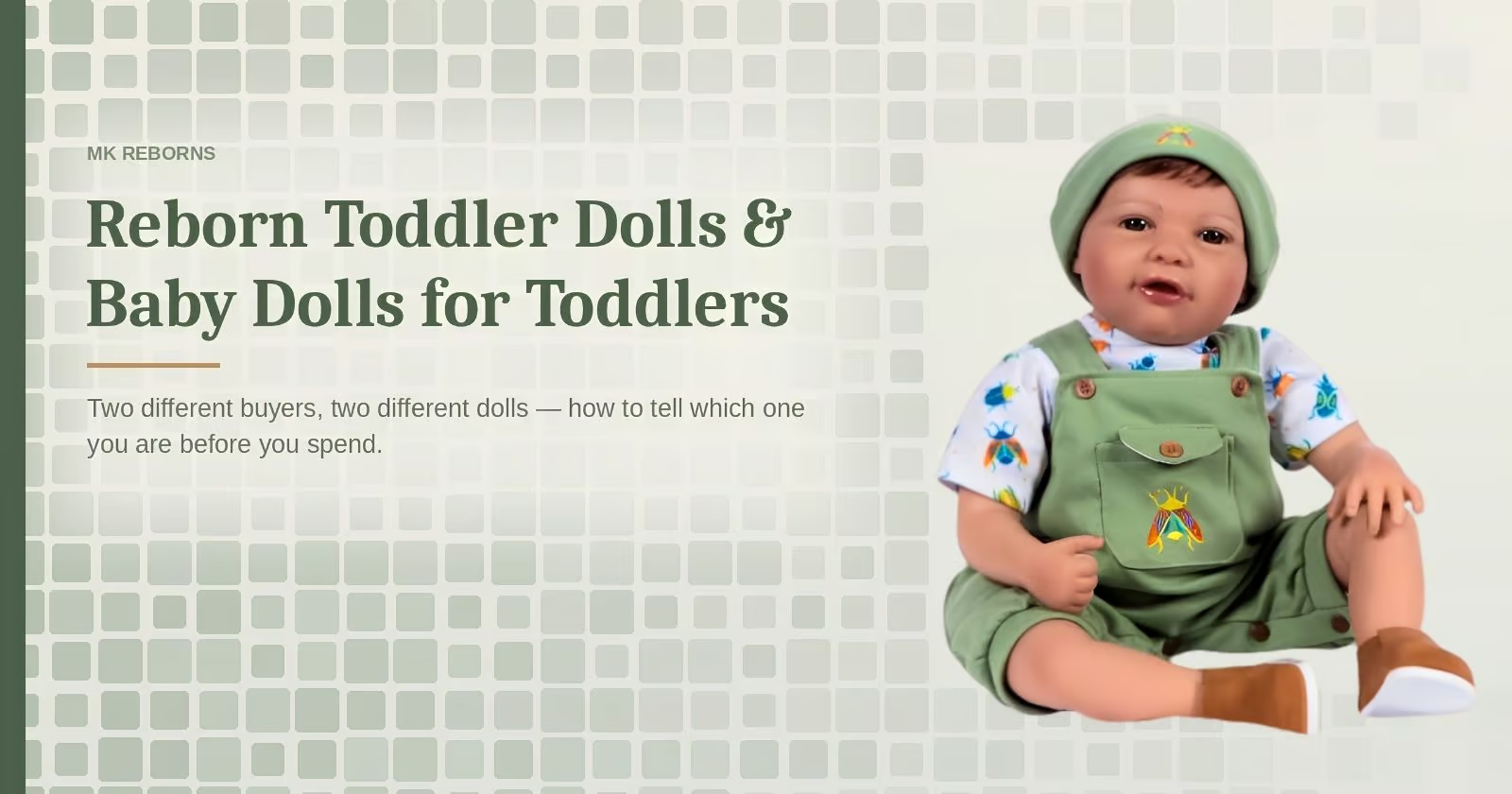
Short answer: “Reborn toddler doll” and “baby doll for a toddler” sound almost identical, but they describe opposite products. A reborn toddler doll is a large collector sculpt, usually 22 to 32 inches, weighted to feel like a real one- to three-year-old and finished with the same hand-painting used on newborn reborns. A baby doll for a toddler is a small, soft, washable, drop-tolerant plaything sized for hands that are still learning to grip. Buying the first when you meant the second is the single most common and most expensive mistake in this category.
We see the confusion constantly in our own customer emails: a grandparent orders a 24-inch full-silicone sculpt as a birthday present for a two-year-old, then writes to ask why it is so heavy and why the fingers are so delicate. Nothing was wrong with the doll. The wrong doll was ordered. This guide separates the two products properly, so you can work out in about five minutes which one you are actually shopping for.
Which one are you shopping for?
Answer these three questions before you look at a single product photo.
1. Who will hold it most of the time?
If the answer is an adult — displaying it, dressing it, photographing it, holding it while watching television — you want a reborn toddler doll. If the answer is a child under five, you want a play doll. This is not a snobbery about “real collectors”; it is about mass and joint construction, which we cover below.
2. Will it be dropped?
Assume yes for any doll a toddler owns. Reborn toddler sculpts have hand-rooted mohair, individually painted nails, and limbs joined with cable ties or disc joints inside a cloth torso. A drop onto a hard floor can split a vinyl limb at the joint or crush a nose tip. Play dolls are moulded to survive exactly this.
3. Does it need to be washable?
Toddlers feed dolls real yoghurt. Reborn finishes are sealed with matte varnish over heat-set paints; they can be wiped with a barely damp cloth, but they are not machine-washable and they do not tolerate submersion. If the doll needs to go in a sink, buy a play doll.
What a reborn toddler doll actually is
The word “toddler” in the reborn world refers to the age the sculpt represents, not the age of the owner. A reborn newborn sculpt represents a baby of zero to three months and typically measures 17 to 20 inches. A reborn toddler sculpt represents a child of roughly twelve months to three years and measures 24 to 32 inches, with a handful of “young toddler” sculpts sitting at 22 inches.
Three things change once a sculpt crosses roughly 22 inches, and all three affect how the doll behaves in your home.
Proportion changes before size does
A newborn sculpt has a head that is about one quarter of its total length, short limbs, and a rounded, forward-tilting posture. A toddler sculpt has a head closer to one fifth of total length, noticeably longer forearms and shins, a flatter chest, and a defined neck. This is why a toddler reborn photographs so differently — it reads as a child rather than an infant even at a glance, and clothing hangs on it in a completely different way. If you have only bought newborn sizes before, read our complete reborn doll size and style guide before ordering any clothing, because toddler sculpts do not follow newborn sizing at all.
Weight stops being a detail and becomes the main constraint
Weighting is what convinces people a reborn is real. A well-weighted 18-inch newborn comes in around 4 to 5 lbs — close to a small real newborn, and comfortable to hold indefinitely. Scale that build up to 28 inches and you are carrying 9 to 13 lbs of glass beads, poly-fil and vinyl. That is a genuine armful. It is wonderful if you want the sensation of holding a real toddler; it is exhausting if you expected something you can carry one-handed around a craft fair.
It also changes storage. A 30-inch sculpt does not fit in a Moses basket, does not sit upright unaided without a stand or a corner, and needs roughly the footprint of a real toddler on a sofa. Buyers routinely underestimate this. Measure the shelf or chair you intend to use before you order.
Joints and posability behave differently
Small newborn reborns are often full-limb vinyl on a cloth torso, and they flop convincingly. Larger toddler sculpts need more structure or the limbs splay. Manufacturers solve this with heavier armature, jointed torsos, or full-body silicone. Each solution has a cost: armature can wear through fabric over years, jointed torsos slightly break the illusion when undressed, and full silicone is the most realistic to the touch but the most expensive and the heaviest of all. Our vinyl versus silicone material guide goes through the trade-off in detail, and why full-body silicone has become so popular covers the case for the premium option.
Reborn toddler sizes at a glance
| Sculpt length | Represents | Typical weight | Best for |
|---|---|---|---|
| 18 inch | Newborn, 0–1 month | 3.5–4.5 lbs | First reborn, easy to hold and clothe |
| 20 inch | Newborn, 1–3 months | 4.5–6 lbs | The most forgiving all-round size |
| 22 inch | Infant, 4–8 months | 6–7.5 lbs | The crossover size; still one-armed carry |
| 24 inch | Young toddler, 12–18 months | 7.5–9.5 lbs | Toddler proportions without full toddler bulk |
| 28–32 inch | Toddler, 2–3 years | 10–14 lbs | Display, photography, therapeutic use |
What a baby doll for a toddler actually is
Now the other product. When a parent searches “baby dolls for toddlers” or “best baby doll for a toddler”, they are shopping for a toy that a small child can own, carry, feed, drop, and sleep next to. The buying criteria barely overlap with the collector list.
Size: smaller than you think
The instinct is to buy a big impressive doll. The better choice is a doll a toddler can actually pick up and carry without help, because carrying it is most of the play. For a two-year-old that usually means 10 to 14 inches; for a three- or four-year-old, up to 16 inches. Our 13-inch and 15-inch ranges sit in exactly this window. The 6-inch and 7-inch miniatures are charming but are better suited to older children and collectors, since small parts and small scale suit careful hands.
Weight: light, and evenly distributed
A play doll should weigh under about 2 lbs. Heavy weighting is the wrong feature here — it makes the doll hard to carry and turns a dropped toy into a bruised foot. Ironically, the very thing that makes a reborn feel real is the thing you should avoid for a young child.
Construction: soft where it matters
Look for a soft or cloth torso, moulded limbs without fine separate fingers, rooted hair replaced by moulded or painted hair, and no small removable accessories. Painted-on hair is more durable than rooted mohair by an order of magnitude, and it survives being chewed.
Safety, honestly stated
Most reborn dolls, including ours, are made and marketed as collectible art pieces rather than as certified children’s toys, and the industry convention is a 3+ or 14+ age marking depending on the piece. That marking exists for real reasons: rooted hair, magnetic pacifiers, small shoes and jewellery are choking risks, and painted finishes are not designed for mouthing. We wrote a full piece on this — are reborn dolls safe for children to play with — and the honest summary is: supervised play with an older child is fine; unsupervised play with a toddler is not what these dolls are for. If you want a doll a two-year-old can own outright and treat like a toy, choose a purpose-made play doll, and keep magnetic accessories such as the ones in our reborn pacifier range away from small children entirely.
Side by side
| Reborn toddler doll | Baby doll for a toddler | |
|---|---|---|
| Primary owner | Adult collector | Child aged 2–5 |
| Typical length | 22–32 in | 10–16 in |
| Typical weight | 6–14 lbs | Under 2 lbs |
| Hair | Hand-rooted mohair | Moulded or painted |
| Finish | Layered heat-set paint, matte sealed | Integral pigment, wipe-clean |
| Drop tolerance | Low — limbs and nose are vulnerable | High — designed for it |
| Washable | Damp cloth only | Usually sink-washable |
| Price band | Mid to premium | Entry level |
| Where to start | Life-sized dolls | Cute reborn dolls |
Why adults buy toddler-sized reborns
It is worth saying plainly, because the reason is often misread from the outside. Toddler sculpts are bought for four broad reasons, and they are not the same people.
Photography and display
A 28-inch sculpt fills a frame the way a newborn cannot. Photographers who shoot doll portraiture almost always move up in size over time, because larger sculpts hold detail at distance and clothing drapes convincingly rather than bunching. If this is your use case, prioritise sculpt quality and skin tone depth over weighting — you are not going to carry it far. Our play-grade versus collector-grade guide is the right next read.
Therapeutic and comfort use
Weighted dolls are used in dementia care and in grief support, and the weight is the active ingredient — it is what makes holding one feel settling rather than symbolic. Where a doll is being chosen for this purpose, the toddler size is often deliberately avoided in favour of an 18 to 20 inch newborn, precisely because it can be held for an hour without arm fatigue. Bigger is not better here. If you are buying for an older adult, ask about carry weight before sculpt size.
Completing a family
Collectors who already own newborn sculpts frequently add a toddler to create an age progression on a shelf, sometimes alongside a pair from our twin reborn dolls range. If that is your plan, read what twin reborn dolls are and why they are popular first, because matching skin undertones across separate orders is much harder than it looks.
Clothing and styling
A large minority of buyers are drawn to toddler sizes simply because real toddler clothing fits them, which opens up a far larger and cheaper wardrobe than doll-specific clothing. A 24-inch sculpt generally takes real 6–9 month baby clothing; a 30-inch sculpt takes 12–18 month. Our own reborn doll clothing range is cut for doll proportions, which differ subtly from real infant proportions in the shoulders.
How to choose well, in order
- Fix the use case first. Display, holding, photography, or a child’s toy. Everything else follows from this and nothing else should be decided before it.
- Set a carry weight ceiling. Hold a bag of flour of the equivalent weight for two minutes. If that is unpleasant, drop a size band.
- Then choose material. Vinyl for durability and value, full silicone for touch realism and price. See our vinyl reborn dolls and full silicone reborn dolls ranges.
- Then choose sculpt and skin tone. This is the aesthetic decision and it should come last, not first, however tempting it is to start here.
- Budget for the extras. A stand, a wig cap if you plan to restyle, and a storage box. Our accessories range and the guide to which accessories make a doll look more realistic cover what is actually worth buying.
Caring for a large sculpt
Bigger dolls fail in specific ways, and the failures are predictable enough to design around.
Limb seams. The weight of a toddler limb pulls on its attachment point every time the doll is lifted. Lift under the torso, not by an arm. Check cable ties annually.
Compression flattening. A heavy sculpt left in one position for months develops a flat spot on whichever cheek or shoulder bears the weight, because the vinyl is thin and the fill compresses beneath it. Rotate the display position every few weeks.
Light. Heat-set paints are stable but not immortal; sustained direct sun shifts blush tones over years, most visibly on cheeks and knees. Keep sculpts out of window lines.
Mohair. Rooted hair on a large sculpt is a substantial investment of labour and the most expensive part to repair. Brush with a soft-bristle wig brush from the ends upward, never wet-comb from the root. Our artistry protection guide covers long-term storage in depth.
Common mistakes we see
- Buying by photograph scale. Studio photos of a 30-inch sculpt and an 18-inch sculpt look nearly identical when both fill the frame. Always read the listed length. Always.
- Assuming toddler means “for a toddler”. The single most costly misreading in the category, and the reason this article exists.
- Ordering clothing before the doll arrives. Sizing varies between sculptors. Measure the doll, then buy.
- Choosing maximum weight. Buyers often want the heaviest option available and then find they never pick the doll up. Weight you do not use is just shipping cost.
- Giving a collector piece to a small child anyway. It rarely ends well for the doll and it teaches the child that the answer to “can I play with it” is complicated. Buy the child their own play doll and let the collector piece be yours.
Where to start at Mk Reborns
If you want a toddler-proportioned collector sculpt, begin at 24-inch reborn dolls and move up to life-sized dolls if the weight suits you. If you want the realism without the bulk, 22-inch is the honest sweet spot and by some distance our most repeat-purchased band.
If you are buying for a child, start at 13-inch or 15-inch baby dolls, keep the accessories simple, and treat any rooted-hair sculpt as a supervised item. Browsing by look rather than size is fine too — lifelike reborn dolls, real life baby dolls, baby girl and baby boy ranges all span multiple sizes — and budget reborn dolls is the sensible place to start if this is a first purchase and you are not yet sure which size suits you. Every listing states sculpt length and finished weight; if a listing anywhere does not state both, treat that as a reason to ask before ordering.
What drives the price of a toddler-sized reborn
Large sculpts cost more, but not simply because there is more vinyl. Four cost drivers do most of the work, and knowing them helps you tell a fairly priced doll from an overpriced one.
Rooting hours scale with head size
Mohair is rooted a few strands at a time with a felting needle. A newborn head might take eight to fifteen hours to root well; a toddler head with a fuller hairline can take twenty-five or more. This is usually the largest single labour cost in the doll, which is why painted-hair toddler sculpts are dramatically cheaper than rooted ones and why a suspiciously cheap rooted toddler is worth a second look at the hairline density.
Paint layers do not shrink
Realistic skin is built from many thin translucent layers, each heat-set before the next. The number of layers does not drop for a larger doll — the area they cover grows. Mottling, veining, capillary work at the temples and nail beds all take proportionally longer.
Weighting material is heavy to ship
Ten pounds of glass beads and poly-fil costs little to buy and a great deal to ship internationally. A meaningful share of the price difference between an 18-inch and a 30-inch doll is freight, not craft. If you are comparing sellers, compare delivered prices rather than list prices.
Failure rate
Larger vinyl parts warp more readily during heat setting and are harder to colour-match across limbs. More pieces are rejected, and the cost of rejects is carried by the pieces that pass. This is a real effect and it is why toddler sculpts from careful makers are not merely proportionally more expensive but somewhat more than proportionally.
Set against that, our budget reborn dolls range exists precisely because not every buyer needs full rooting and full weighting on a first purchase. A painted-hair, lightly weighted sculpt in a mid size teaches you what you actually want from the next one, at a fraction of the outlay.
Choosing a play doll by the child’s age
If you landed here as a parent rather than a collector, this is the section you want. Doll preferences shift quickly in early childhood, and the doll that delights a two-year-old is often ignored by the same child at four.
Twelve to twenty-four months
At this stage the doll is a comfort object more than a character. Prioritise softness, a light weight the child can lift, and a face with simple, high-contrast features. Fine detail is wasted; durability is not. Avoid anything with removable clothing that includes buttons or ribbons.
Two to three years
Imitative care play begins in earnest: feeding, wrapping, putting the doll to bed. This is when a doll that can sit unaided and has limbs that stay where they are put becomes genuinely more fun. Ten to fourteen inches remains the right size. A single simple accessory such as a blanket adds a lot; a basket of twelve accessories mostly gets scattered.
Four to six years
Narrative play takes over and appearance starts to matter to the child rather than the adult. This is the age at which a more realistic doll becomes appropriate and appreciated, and where a supervised introduction to a well-made lifelike sculpt can genuinely land. Sizes up to sixteen inches work well, hair can be rooted if the child is gentle, and the child will now notice and care about skin tone, expression and clothing.
Seven and older
Collecting behaviour appears. Children of this age often want the doll to be theirs specifically, to be named, and to be kept somewhere safe rather than carried everywhere. This is the point at which many families buy their first genuine reborn, and it is usually a happier purchase than the same doll bought five years earlier.
Frequently asked questions
What size is a reborn toddler doll?
Most reborn toddler sculpts measure 24 to 32 inches, representing a child of roughly one to three years. A few “young toddler” sculpts sit at 22 inches. Anything under 22 inches is generally a newborn or infant sculpt regardless of how it is described.
How much does a reborn toddler doll weigh?
A weighted vinyl build runs about 7.5 to 9.5 lbs at 24 inches and 10 to 14 lbs at 28 to 32 inches. Full-silicone versions of the same sculpt weigh appreciably more. Weight is the constraint most buyers underestimate, so check it before sculpt length.
Are reborn dolls suitable for toddlers to play with?
Generally no. Reborn dolls are collectible art pieces with rooted hair, painted finishes and small accessories, and they are typically age-marked 3+ or 14+. For a child under five, choose a purpose-made play doll of 10 to 16 inches with moulded hair and no small parts, and reserve reborn sculpts for supervised handling by older children.
What is the best baby doll size for a two-year-old?
Ten to fourteen inches. The doll should be light enough for the child to carry unaided, because carrying it is most of the play. Larger dolls look more impressive to adults and get used less by children.
Can a reborn toddler doll wear real baby clothes?
Yes, and this is one of the main attractions of the size. A 24-inch sculpt usually takes real 6–9 month clothing; a 30-inch sculpt usually takes 12–18 month. Doll proportions differ slightly at the shoulder, so favour stretch fabrics and open-front styles.
Is a toddler reborn worth it if I already own newborn sculpts?
It depends on why you collect. If you display, photograph, or dress your dolls, a toddler sculpt adds genuinely new range. If you mainly hold your dolls, the extra weight may reduce how often you actually use it — most collectors who hold rather than display stay at 18 to 20 inches.
How should I store a 30-inch reborn doll?
Flat or seated with support, out of direct sunlight, with the position rotated every few weeks to avoid compression flat spots on cheeks and shoulders. Never store hanging by the arms, and never in a sealed plastic bag, which traps moisture against the finish.